
When to Replace Your Garage Door Weatherstripping in Gadsden (And Which Type to Choose)
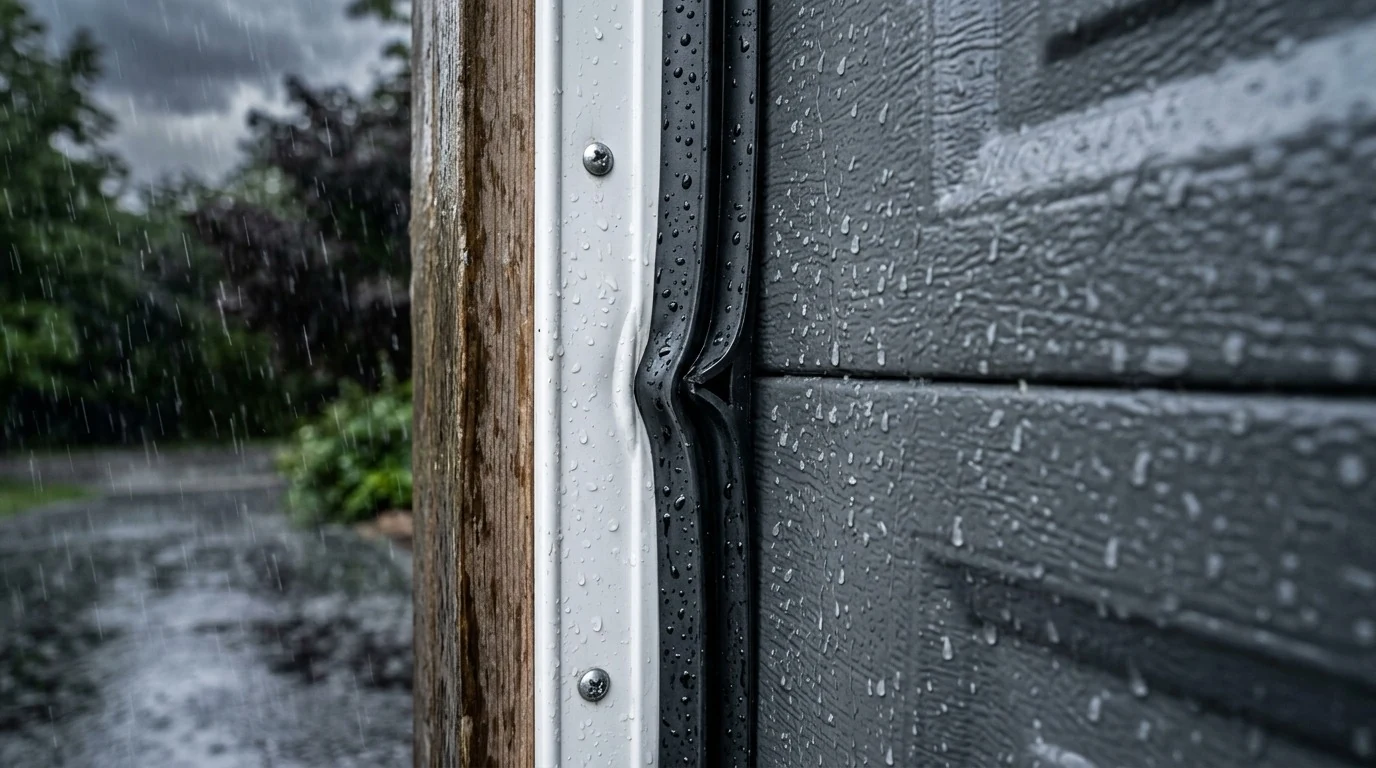
Garage door weatherstripping is one of those things you stop noticing until it fails. When it's working, your garage stays dry during Alabama rainstorms, pests stay out, and the conditioned air in your house doesn't bleed out through the garage floor. When it fails, water gets in under the door, insects find their way inside, and the thermal barrier between your garage and the outside world develops a significant gap.
In Gadsden's climate — where summer rainstorms can dump inches of water in an hour and winter nights occasionally dip below freezing — weatherstripping matters more than it might in a milder climate. Here's how to assess what you have and when to replace it.
The Three Types of Weatherstripping on a Garage Door
Bottom Seal (Door Bottom Weatherstripping)
The rubber or vinyl strip along the very bottom edge of the door. This is the piece that presses against the floor when the door closes, creating the primary seal against water, drafts, and pests. It's also the first piece to wear out — it drags across the concrete with every door cycle and is in direct contact with water, grit, and UV radiation.
Bottom seals come in several styles:
- T-end or T-bottom: A rubber seal with a T-shaped cross section that slides into a retainer track on the door bottom. This is the most common type on modern residential doors. Replacement involves sliding the old seal out and the new seal in — no tools required for most doors.
- Bead-style: A round-ended seal that inserts into a narrower retainer. Less common but still widely available.
- Nail-on or staple-on: Found on older doors without a retainer track. The seal is attached directly to the door bottom. Replacement requires removing the old staples or nails and attaching the new seal.
Side Seals (Vertical Weatherstripping)
The foam or rubber strips mounted to the door frame jambs on each side. When the door closes, the edges of the door press against these seals. Side seal failure shows up as daylight visible along the sides of a closed door, cold drafts in winter, or insects entering through the vertical edges.
Side seals are typically attached with nails or screws to the stop molding on the door frame. Replacement involves prying off the old seal strip and nailing or screwing on new material. This is a straightforward DIY project.
Top Seal (Header Weatherstripping)
The seal along the top edge of the door opening, where the door meets the garage header. Water intrusion from above — rain blowing onto the driveway and up under the door, or driving rain — can penetrate through a failed top seal. This piece is less frequently replaced than the bottom seal but fails over time from UV exposure and compression set.
How Gadsden's Climate Accelerates Weatherstripping Wear
Rubber and vinyl weatherstripping degrades from three primary forces: UV radiation (sunlight), ozone (present in Alabama's air at modest levels), and compression set (the material permanently deforms from being compressed repeatedly).
In Gadsden's subtropical climate, all three are more aggressive than in northern climates:
- UV intensity in Alabama is higher than the national average, accelerating ozone cracking in rubber seals
- Temperatures exceeding 90°F routinely occur in summer — heat accelerates compression set in rubber
- The wet-dry cycling from frequent summer rainstorms and periodic dry spells causes rubber to expand and contract repeatedly, breaking down the material's elasticity faster than in more consistent climates
The practical result: garage door bottom seals in Gadsden typically last 5–8 years before showing significant degradation, compared to 10+ years in cooler, drier climates.
Signs It's Time to Replace
You can see light under the door when it's closed. Stand in a dark garage with the door closed during daylight hours. Light visible under the door — even in small strips — means the seal is no longer making full contact with the floor.
Water gets in during rain. If your garage floor is wet after a rainstorm and no window or roof penetration explains it, the bottom seal is the first place to look. Puddling along the base of the door is the signature of a failed bottom seal.
The seal is cracked, torn, or pulling away. Direct visual inspection — the rubber is cracked or has sections that are completely torn away, or the seal is hanging down instead of maintaining its shape — means it's time to replace.
Pests entering through the door perimeter. Ants, roaches, and other insects are excellent at finding gaps that you might not notice visually. If you're seeing pest activity that seems to concentrate near the garage door base, the weatherstripping may have failed even if you can't immediately see where.
Choosing the Right Replacement Seal for Gadsden
For Alabama's climate, look for:
- EPDM rubber rather than standard neoprene. EPDM has significantly better UV and ozone resistance — it maintains its flexibility longer in high-UV, high-temperature environments.
- UV-stabilized vinyl as an alternative on side and top seals where EPDM isn't available in the profile you need.
- Avoid plain neoprene bottom seals if you have options — they're cheaper but will require more frequent replacement in Alabama's climate.
Bottom seals in common sizes (8-foot for a 9-foot door, 16-foot for an 18-foot door) are available at hardware stores. If your door uses an unusual retainer profile, bring a short piece of the old seal with you to match the cross-section.
Need weatherstripping replaced as part of a tune-up, or just want a tech to handle the full perimeter? We include weatherstripping inspection in our standard tune-up visit and can replace all four sides as part of the same appointment. Call (256) 792-0501 to schedule.
Need Help Right Now?
We answer every call — 24 hours a day, 7 days a week. No voicemail, no waiting.