
Is Your Garage Door Making Your Gadsden Home Less Secure? 7 Things to Check
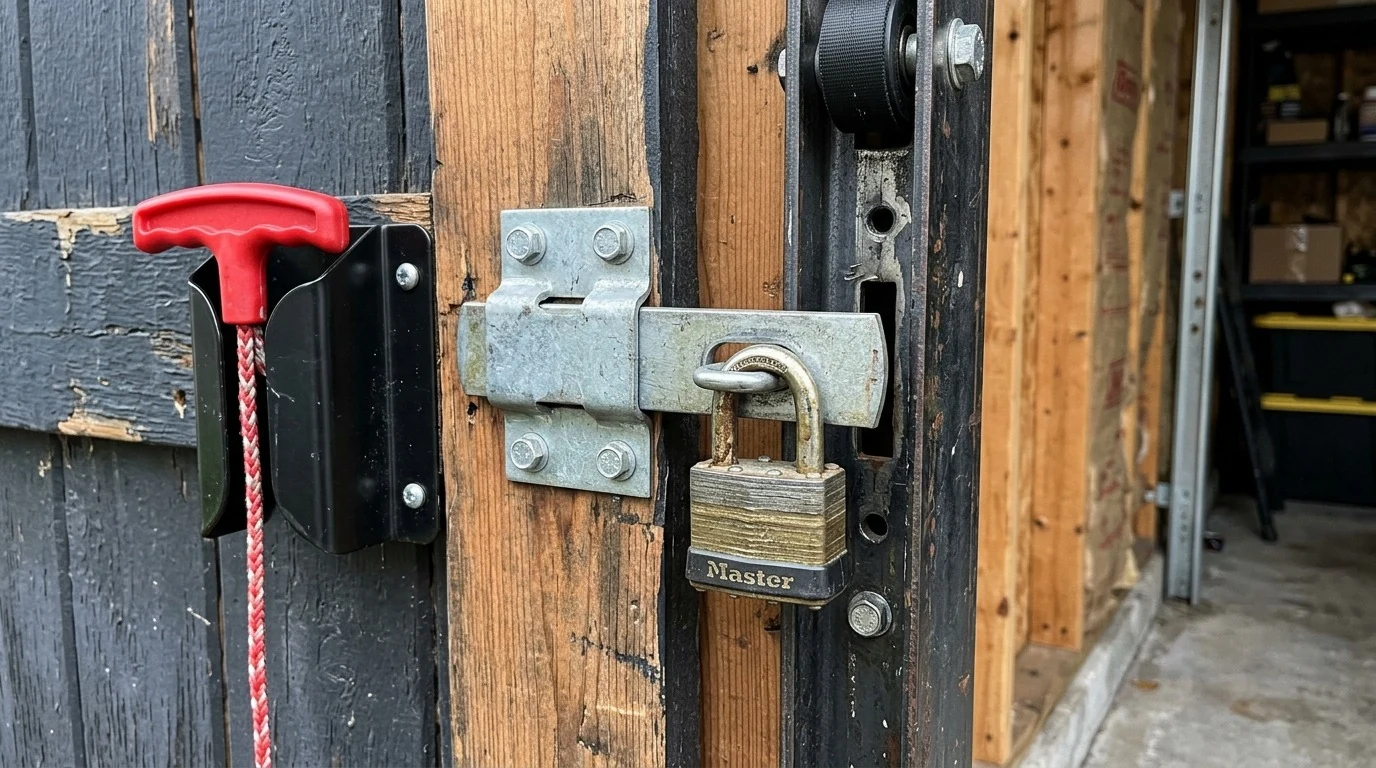
Here's something worth knowing about residential break-ins: law enforcement data consistently shows that attached garages are one of the most common entry points for home burglaries. A garage door that's easy to defeat — whether through old technology, poor maintenance, or overlooked vulnerabilities — gives an intruder direct access to your home's interior.
This isn't meant to alarm you unnecessarily. But it is worth doing a real security check on your garage door, because several of the most common vulnerabilities are either free or inexpensive to fix.
1. Your Opener Uses Fixed Code Technology
Garage door openers made before roughly 1996 use fixed radio codes — the remote sends the same signal every time you press the button. The problem: electronic code grabbers can capture that signal and replay it to open your door. This technology is genuinely outdated and represents a real security vulnerability.
Modern openers use "rolling code" (also called "Security+" or "Intellicode") technology, which generates a new code with every use. Even if someone captured yesterday's signal, it won't work today. If your opener is older than 25 years or doesn't advertise rolling code security, this is worth addressing.
Fix: Replace the opener. A new LiftMaster or Chamberlain belt-drive opener with rolling code security runs $300–$500 installed. It's also quieter and smarter than a 25-year-old unit.
2. The Emergency Release Cord Is Accessible From Outside
Every garage door opener has a red emergency release cord that disconnects the door from the trolley, allowing you to open the door manually. This is a safety feature — but it's also a potential vulnerability.
With a wire coat hanger slipped through the top of the door frame, a person can hook the emergency release cord and pull it, disconnecting the door from the opener and allowing it to be raised manually — bypassing the lock entirely. This technique is documented in law enforcement reports across the country.
Fix: Zip-tie the emergency release cord to the trolley arm at an angle that makes it very difficult to hook with a wire. You can still pull the cord in an actual emergency — it just takes more deliberate effort than a thin wire from outside can manage. Some aftermarket cord shields are also available. This is a two-minute, free fix.
3. There's No Interior Lock on Your Garage Entry Door
The door between your garage and your living space — the entry door — is often an afterthought. Many homes have only a basic doorknob on this door, or a lock that's never been changed since the house was built. This interior door should be treated with the same security seriousness as your front door.
Fix: Install a deadbolt on the interior garage entry door. Make sure the door itself is solid core — hollow core doors can be kicked in quickly regardless of the lock quality. This is a hardware store project that costs $50–$150.
4. Your Opener's Wi-Fi or Smart Features Aren't Secured
Smart garage door openers connected to your Wi-Fi network are only as secure as your network. A weak home Wi-Fi password, or a guest network that shares the same security level as your main network, creates a potential vulnerability for any connected device — including your opener.
Fix: Use a strong, unique password for your home Wi-Fi. Make sure the router firmware is up to date. If you use the opener's app, enable two-factor authentication if the manufacturer offers it. Keep your opener's firmware updated — LiftMaster and Chamberlain push security updates periodically.
5. You're Leaving the Remote in Your Car
A garage door remote sitting in your car visor is a house key. If your car is broken into — whether in your driveway, at a store, or at a restaurant — the thief now has a button that opens your garage and, through it, your home. If the car registration in the glove box has your address on it, they have the address too.
Fix: Keep the remote in your pocket or purse, not in the car. Or switch to using the keypad or your smartphone as your primary means of access, and remove the remote from the car entirely. If your car was broken into and the remote was inside, change the opener's access code immediately.
6. The Door Has Light-Gap Vulnerabilities Along the Frame
Stand inside your closed garage during the day and look at the perimeter of the door. Do you see light coming in along the sides, top, or bottom? Light gaps are also force vulnerabilities — a door with significant perimeter gaps can often be pried open more easily than a door that seals tightly against the frame.
Fix: Replace weatherstripping along all four sides of the door opening. Side and top seals cost $30–$60 in parts and can be replaced in an afternoon. A properly weather-sealed door is also more resistant to prying.
7. You Don't Have Vacation Mode or Monitoring
When you're traveling — whether for a weekend or two weeks — your garage is an unmonitored vulnerability. Some openers have a "vacation mode" or "lock mode" feature that disables the remote controls while leaving the wall button functional, which means even if someone captured your remote signal, it won't work while you're away.
Fix: Check whether your opener has a vacation/lock mode and use it when you travel. If it doesn't, this is one of the best arguments for upgrading to a smart opener with monitoring capability — you can see whether the door is open or closed from anywhere, get alerts if it opens unexpectedly, and close it remotely if you realize you forgot.
A Final Note
None of these vulnerabilities are unusual or specific to Gadsden — they exist in homes across the country. But they're also all fixable, most of them cheaply. A garage door that was secured in 2005 may not be secured adequately by 2026 standards. If your opener is old, your remote is in the car, and the emergency release is accessible from outside, you're carrying more risk than necessary.
Questions about upgrading your opener for better security, or need a new door with better sealing? Call us at (256) 792-0501.
Need Help Right Now?
We answer every call — 24 hours a day, 7 days a week. No voicemail, no waiting.