
Why Your Garage Door Won't Open on Cold Alabama Mornings (And How to Fix It)
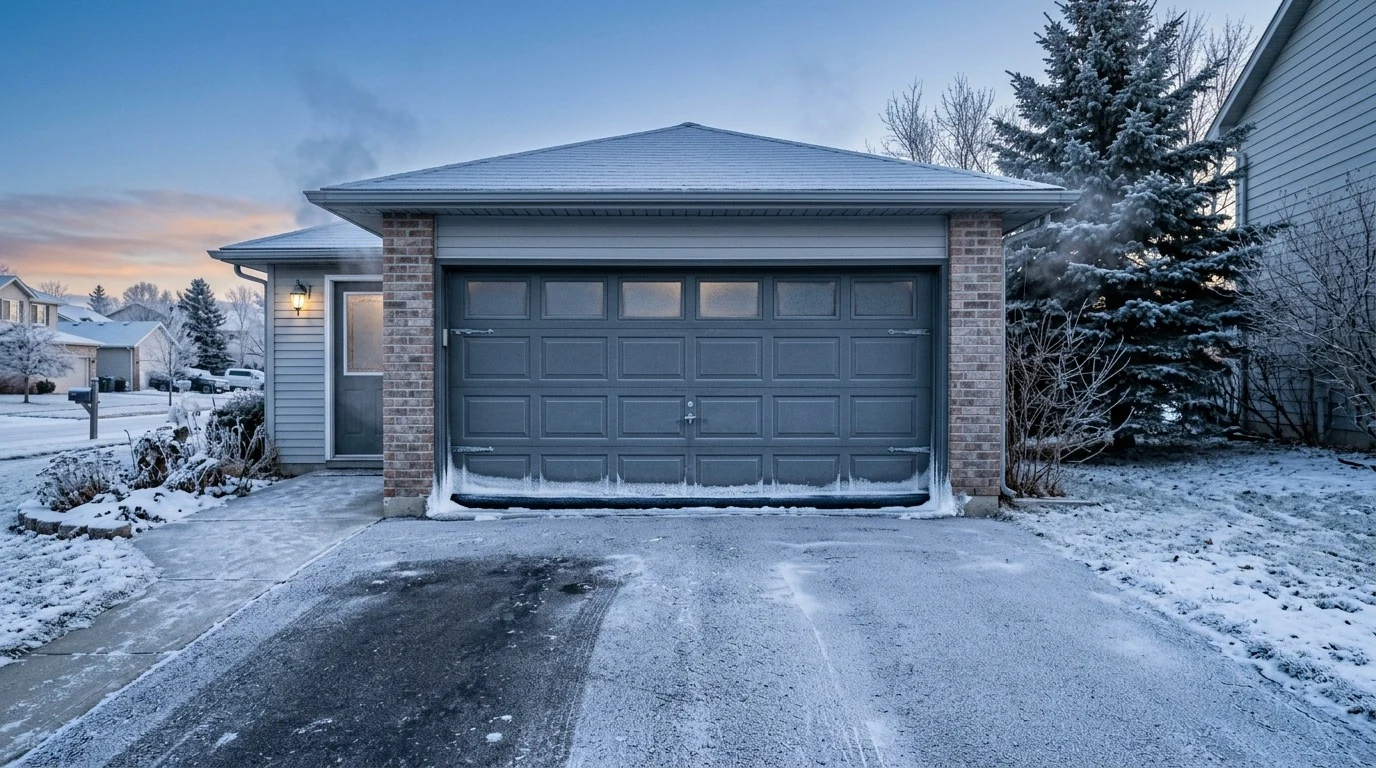
It's 7 a.m. You need to be somewhere. You press the button on your garage door opener and — nothing. Or it groans halfway up and stops. Or the door moves about six inches and the opener motor gives up.
Cold weather garage door problems are one of the most common calls we get in Gadsden from November through February, and the frustrating part is that most of them are preventable. Here's what's actually happening when your door acts up in cold weather, and what you can do about each cause.
Cause 1: The Lubricant Has Thickened or Dried Out
This is the most common cold-weather cause we see in Etowah County. Standard garage door grease — especially petroleum-based products — gets thick and stiff in cold temperatures. When the temperature drops below 40°F, grease that was liquid and smooth in September can become the consistency of peanut butter by January.
Thick grease dramatically increases friction in the rollers, hinges, and spring coils. Your opener motor, which is sized to move a door with normal friction levels, suddenly can't generate enough torque. It may trip its built-in overload protection and stop mid-cycle.
The fix: Use a silicone-based lubricant or a product specifically rated for low temperatures. Avoid WD-40 (it's a solvent, not a lubricant) and standard white grease in winter. Apply to the spring, hinges, rollers, and the full length of the track. If this is your first time lubricating in a while, the improvement you'll notice is significant. In Gadsden's climate, we recommend lubricating every six months — once in spring, once in fall before temperatures drop.
Cause 2: Metal Components Have Contracted
Steel, aluminum, and other metals contract in cold temperatures. For a garage door system, this means:
Springs lose tension. A torsion spring that was properly calibrated at 70°F has slightly less tension at 30°F. If the spring was already on the weaker end of its operating range, the added tension loss from cold weather can tip it below the threshold needed to counterbalance the door.
The track narrows slightly. This sounds minor, but rollers that run freely in summer can bind against track walls in winter, especially in older systems where the tolerances aren't generous to begin with.
The door itself contracts. Steel or wood panels shrink, which can cause sections to bind against each other or against the weatherstripping.
The fix: For springs that are marginal — a door that's already harder to lift manually than it should be — cold weather is often what pushes a failing spring into actual failure. If your door struggled last winter, schedule a spring inspection before November hits. For track binding, a tech can check clearances and adjust bracket positions if needed.
Cause 3: Safety Sensors Are Misaligned or Frosted
Your garage door opener has two photoelectric safety sensors mounted near the floor on each side of the door opening. They send an invisible beam across the door path — if anything breaks that beam, the door won't close (and in some opener models, won't open either).
Cold weather affects sensors in two ways. First, frost or condensation can form on the sensor lenses, blocking the beam. Second, the plastic mounting brackets can warp or shift slightly in cold temperatures, causing the sensors to point past each other instead of directly at each other.
When sensors are misaligned or blocked, most openers show a flashing light (usually on the motor unit or the wall button) and refuse to operate the door.
The fix: Check both sensor units. The indicator lights should both be solid — not blinking. If one is blinking, gently wipe the lens with a dry cloth and check that the sensors are aimed directly at each other. Loosen the mounting wing nut, adjust the angle until both indicators go solid, and re-tighten. If this happens repeatedly, the bracket may need to be repositioned or replaced.
Cause 4: The Bottom Weatherstripping Has Frozen to the Ground
When overnight temperatures drop below freezing after a rain or snow event, the rubber weatherstripping at the bottom of your door can freeze solid to the concrete floor. When the opener tries to raise the door, it's essentially trying to peel rubber off ice — which creates enough resistance to either fail to open the door or cause the opener to trip its safety mechanism.
The fix: Don't force it. Running the opener against a frozen-down door stresses the drive system and can crack the bottom seal. Instead, use warm water poured along the base of the door to melt the ice, or use an ice scraper to carefully break the seal before operating the opener. Going forward, applying a thin layer of silicone spray to the bottom weatherstripping in late fall can prevent it from bonding to the concrete.
Cause 5: The Opener's Sensitivity Settings Are Off
Modern garage door openers have adjustable force/sensitivity settings that control how much resistance the motor will push against before stopping. These are typically set at the factory or during installation based on normal operating conditions.
In cold weather, the increased friction from all the causes above means the door requires more force to move. If the opener's sensitivity is set close to the minimum, it may interpret the normal (but increased) cold-weather resistance as an obstruction and stop the door mid-cycle.
The fix: Consult your opener's manual for how to adjust the up-force and down-force settings. Most openers have adjustment screws or buttons on the motor unit. Increase the force setting by one or two increments and test. However — be careful not to increase it so much that the opener will push past an actual obstruction. This is a balance, and if you're not sure, it's worth having a tech do it correctly.
When Cold Weather Problems Signal Something Bigger
Cold weather doesn't cause garage door problems out of nowhere — it amplifies existing weaknesses. A door that barely works in winter was already borderline in summer. The low temperatures are a diagnostic tool: they're telling you that the spring is weak, the rollers are worn, or the system is overdue for maintenance.
If your Gadsden-area door is giving you cold weather trouble, don't just wait for spring. The problem that barely works in January will fail in February. Call us at (256) 792-0501 — we service doors year-round, including on the coldest mornings of the year.
Need Help Right Now?
We answer every call — 24 hours a day, 7 days a week. No voicemail, no waiting.