
Garage Door Noises and What They Mean: A Gadsden Homeowner's Diagnosis Guide
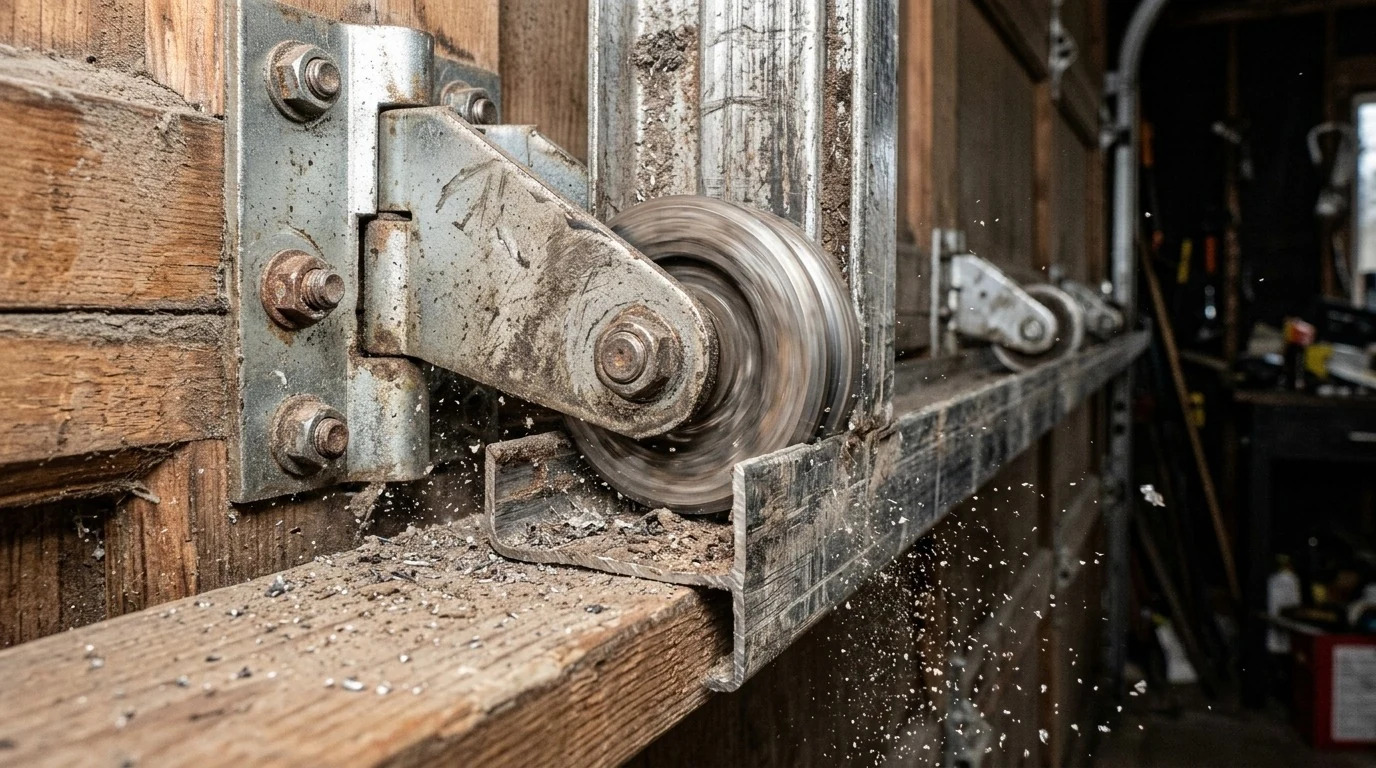
Garage doors aren't supposed to be silent — there's a motor, springs, rollers, and hardware all moving together. But there's a difference between normal operational sound and the noises that mean something is wrong. Learning to tell them apart can save you from a surprise failure and an emergency service call.
Here's what each type of garage door noise typically indicates, ordered from most to least urgent.
Loud Bang or Crack During Operation
Urgency: High. Stop the door.
A loud bang — like a gunshot — coming from the garage is almost always a torsion spring failure. The spring is releasing its stored mechanical energy as it breaks, producing a crack that homeowners frequently describe as a gunshot or a car backfiring inside the garage. You may have heard it overnight or while the door was in mid-operation.
After a spring breaks, the door will feel very heavy to lift manually (if it can be lifted at all), and the opener may struggle or refuse to move it. You'll often see a gap in the spring coil if you look at the horizontal bar above the door.
What to do: Disconnect the opener by pulling the red release cord. Don't attempt to operate the door. Call us at (256) 792-0501 — spring replacement is available 24 hours a day.
Grinding Sound During Operation
Urgency: Medium. Schedule a service call within a week or two.
A consistent grinding noise that tracks with the door's movement usually points to one of three things:
- Worn rollers. Steel rollers develop flat spots and rust in Gadsden's humidity. When a roller loses its smooth surface, it grinds against the track wall with every revolution. The fix is roller replacement — nylon sealed-bearing rollers are the better replacement option; they're quieter and they don't rust.
- Debris in the track. Small rocks, dried leaves, or hardened grease deposits in the track cause grinding as the rollers pass over them. Clean the track with a dry rag and see if the noise resolves.
- Opener drive gear wear. Chain-drive openers have a plastic drive gear that meshes with the sprocket. When this gear wears down, it produces a grinding or stripping sound — especially at the start of movement. If the grinding comes from the opener motor unit rather than the door itself, it's likely the drive gear.
Squeaking or Creaking During Operation
Urgency: Low but don't ignore it. Lubricate now.
Squeaking is almost always a lubrication problem. In Gadsden's climate — 70–75% average humidity year-round — lubricant evaporates faster than in drier regions. Condensation cycling in winter also washes lubricant from spring coils and hinges.
When springs lose their lubricant coating, coils rub against each other and produce a characteristic squeak or creak that corresponds to the door's movement. Dry hinges produce a slower, lower squeak. Dry rollers squeak at the rollers' rotation frequency — a faster, higher-pitched sound.
Fix: Apply white lithium grease or silicone spray to springs, hinges, and roller stems. Don't lubricate the track itself (the flat section, below the curve). If the squeak returns within a few weeks after lubrication, the metal surface may already be corroded enough to require replacement.
Rattling or Vibrating Sound
Urgency: Low. Tighten hardware soon.
Rattling during operation usually indicates loose hardware. Garage doors vibrate with every cycle, and over years, nuts and bolts work loose. The most common culprits:
- Loose track bracket bolts — the brackets that mount the tracks to the wall vibrate and loosen over time
- Loose hinge bolts — if a hinge has a cracked roller stem hole or loose fasteners, it rattles when the section flexes
- Chain drive vibration — chain-drive openers are inherently louder and vibrate more than belt drives; if you have an older chain drive, the vibration is partly structural, not a fault
Fix: Work your way around the door with a socket wrench, snugging up any bolts that have worked loose. Don't overtighten. If the rattling persists, look for a loose chain on the opener (the chain should have about a half-inch of slack, not be drooping) and adjust at the tensioner if needed.
Popping or Clicking Sound
Urgency: Medium. Investigate before it worsens.
Popping sounds during garage door operation tend to come from one of two sources:
Torsion spring tension issues. A spring that's improperly tensioned or that has a section of coils binding together can produce a popping sound as the binding coils suddenly release. This is different from the loud crack of a spring break — it's a lower, repetitive pop. It indicates the spring needs inspection and possibly tension adjustment.
Sections binding against each other. Door sections connect through hinges; if a hinge is damaged, a section is warped, or the weatherstripping between sections is swollen (common in Gadsden after long stretches of high humidity), sections may bind and pop as they flex through the curve of the track.
Slapping or Whipping Sound at the End of Travel
Urgency: Low to medium. Check the opener's limit settings.
If the door slaps hard when it reaches the fully open or fully closed position, the opener's travel limits may be set incorrectly. The opener is supposed to stop the door's movement just as it reaches the end position — if the limits are set too far, the door slams into the stop bolts or the floor. This creates unnecessary stress on the door's bottom section and on the opener's drive system.
The travel limit adjustment is documented in your opener's manual — typically small screws or buttons labeled "Up" and "Down" on the motor unit. Make small adjustments and test after each one.
When to Call vs. When to Try It Yourself
Squeaking, rattling, and minor popping are generally DIY-territory for a homeowner who's comfortable with basic maintenance. A loud bang, persistent grinding from the opener, or any noise accompanied by visible damage (gap in the spring, door off track, panel dents) is a service call.
Hearing something that's not on this list, or not sure which category your noise falls into? Call us at (256) 792-0501 and describe what you're hearing. We can often narrow down the cause from a description alone.
Need Help Right Now?
We answer every call — 24 hours a day, 7 days a week. No voicemail, no waiting.