
Is an Insulated Garage Door Worth It in Gadsden, AL? Honest Answer
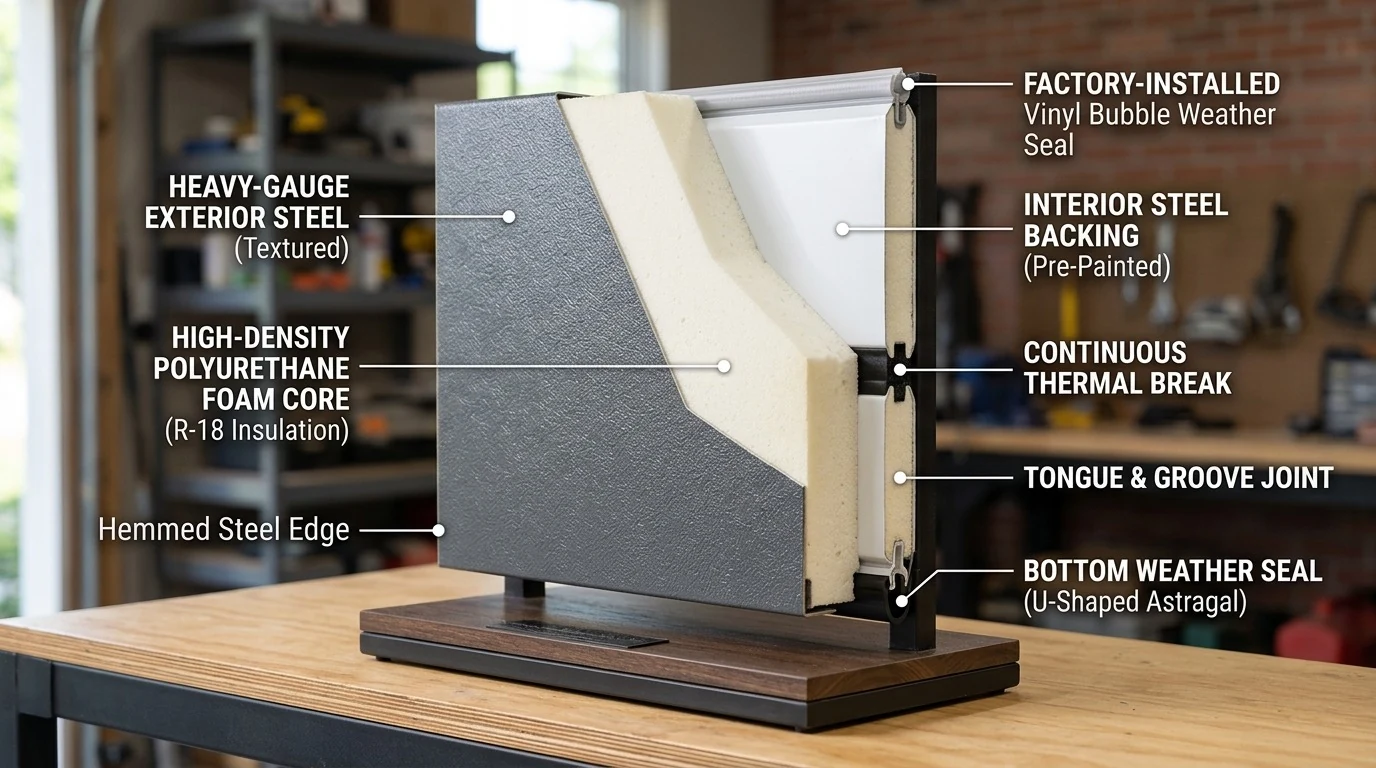
Walk into any home improvement store and you'll see insulated garage doors pitched as an upgrade — better energy efficiency, quieter operation, a more comfortable garage. But they cost anywhere from $200 to $800 more than a comparable non-insulated door. Is that worth it in Gadsden, Alabama?
The honest answer: it depends on how you use your garage. Let me walk through the actual factors so you can decide what makes sense for your situation.
First, Let's Talk About R-Value
R-value measures a material's resistance to heat flow. Higher R-value means better insulation. Garage doors typically range from R-0 (single-layer, no insulation) to R-32 (triple-layer with premium insulation).
For context: a wall in a well-built Gadsden home probably has R-13 to R-21 insulation. A garage door with an R-10 rating is not creating an insulated envelope — but it is substantially better than R-0.
What matters more than the door's R-value in isolation is whether the rest of the garage is insulated and conditioned. An R-16 door on a garage with uninsulated walls and a leaky ceiling is like putting high-quality windows in a house with holes in the walls.
The Case FOR Insulation in Gadsden's Climate
Summer heat is extreme here. Gadsden regularly hits 90–95°F in summer, often with high humidity. A non-insulated garage door allows that heat to radiate directly into the garage space. If your garage is attached to your house, that heat load affects your home's HVAC performance. If you work in the garage, it makes summer projects genuinely miserable.
Attached garages benefit most. The wall between your attached garage and your living space is usually the weakest thermal boundary in the house. If that shared wall isn't heavily insulated (many aren't), a hot garage means a hotter adjacent room. An insulated door + insulated walls + insulated ceiling on an attached garage can meaningfully reduce the thermal load on your AC.
The door is structurally stronger. This is an underappreciated benefit. Insulated garage doors — especially triple-layer steel-foam-steel construction — are significantly more rigid than single-layer doors. They dent less easily, they warp less in Alabama's temperature extremes, and they generally feel more substantial. In our experience, insulated steel doors hold up better over 15+ years than single-layer equivalents in Gadsden's climate.
Noise reduction is real. If you have a drum set in the garage, a workshop, or a neighbor whose car you hear pulling in at 11 p.m., the added mass of an insulated door noticeably reduces sound transmission. This is also relevant if the garage is adjacent to bedrooms.
The Case AGAINST (or "It Depends")
Detached garages are a different calculation. If your garage isn't attached to your house, there's no heat transfer path to your HVAC system from the garage door. An insulated door will make the garage itself more comfortable to work in, but it won't have any impact on your home's energy bills. Whether that's worth the premium is purely a comfort question.
If the garage isn't climate-controlled anyway. An insulated door on a garage with uninsulated walls, no HVAC, and a large gap under the door isn't doing much work. You'd get more thermal performance from air-sealing the gaps around the door frame and adding weatherstripping than from upgrading to an R-16 door on an otherwise leaky garage.
The energy savings are real but modest in isolation. The Department of Energy estimates insulating an attached garage (fully, not just the door) can reduce heating and cooling costs for adjacent rooms. But the garage door alone, in a garage that's otherwise uninsulated, will produce savings in the range of a few dollars per month. It's not zero, but it's not the dramatic efficiency story some sellers suggest.
What We Actually Recommend for Gadsden Homes
For an attached garage that's used as living space (workshop, home gym, hobby space) or that has HVAC: absolutely get the insulated door, and insulate the walls and ceiling while you're at it. The comfort improvement is significant and the structural benefits are real.
For an attached garage that's purely for parking: an insulated door is still the better choice for the structural rigidity alone, plus the heat load reduction for the adjacent rooms. The step from R-6 to R-10 or R-12 is meaningful; going to R-18 in a basic parking garage probably isn't worth the additional cost.
For a detached garage used only for storage or parking: the non-insulated door is defensible. Put the money saved toward insulating the walls if you want to improve the space.
Questions about what makes sense for your specific garage? Call us at (256) 792-0501. When we come out for a door replacement quote, we're happy to walk through the insulation question for your specific situation.
Need Help Right Now?
We answer every call — 24 hours a day, 7 days a week. No voicemail, no waiting.